
Savouring the Iberian Coast

by Angela Sanford
One of the essential parts of any trip to a new destination, for me, is sampling foods that are authentic to the region. This trip took us to three different countries along the Iberian coast, so I was excited to experience new flavours and traditional dishes.
The best part? I could try whatever I wanted without worrying about the digestive consequences. Having to navigate food restrictions because of celiac disease while travelling is no fun, so having the freedom to simply order from a menu without hesitation felt like a vacation all on its own. (Seriously, why can’t we process food the way Europe seems to? Sigh.)

Our first stop was Barcelona, where we began exploring the local cuisine and first up was sangria—a cold, refreshing, and surprisingly strong combination of wine, brandy, and loads of fruit. It was delicious and the serving size was impressive. By the time I finished the glass, I was fairly certain I should have been preparing to be completely intoxicated. Somehow, I survived.
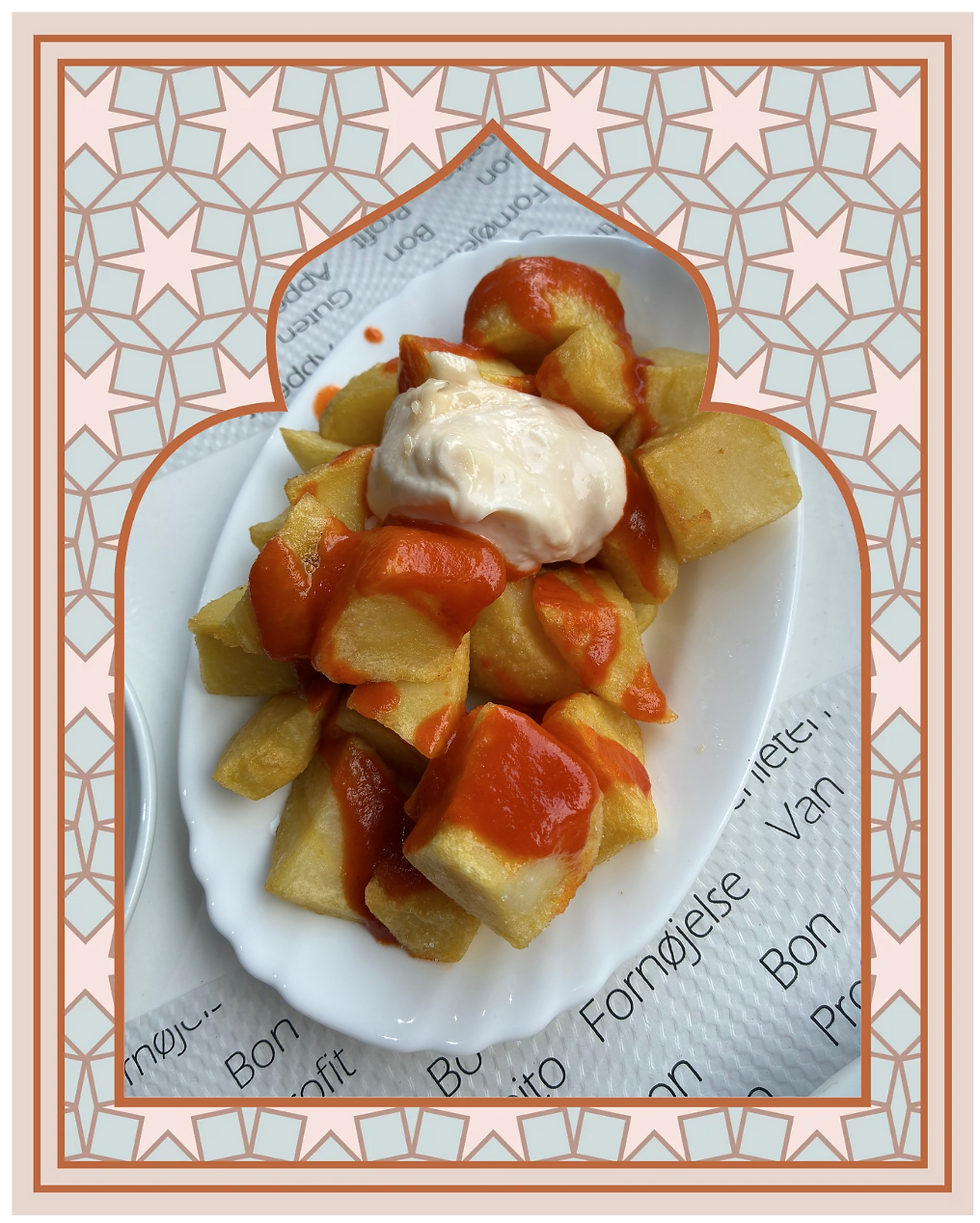
Next came tapas, which are essentially small, shareable dishes similar to what we might call appetizers. We tried patatas bravas—potatoes topped with a tomato-based sauce that had a bit of a kick. It wasn’t quite as spicy as I would have preferred, but it was definitely more heat than Mum, my travel companion, was expecting. I had imagined something a little more sophisticated, but when the plate arrived, it looked surprisingly similar to hash browns with ketchup. Different country, same basic idea! Regardless, they were tasty.

Then came paella. Mom and I decided to share a chicken and vegetable paella, served as one large dish between the two of us. Once again, the portion size was much larger than our appetites. The dish actually reminded me of one of my own favourites that I make at home—Texas Hash. The biggest difference was the use of saffron instead of chili.
We also learned that chili is not exactly a beloved spice in Spain—not just on plates, but even in conversation! While the paella was excellent, I couldn’t help wishing mine had arrived with a little more heat.
A few days later, I finally had the chance to try churros. Mom had had them before, so she passed. I, however, have watched churros become increasingly popular in Nova Scotia but have never been able to try them because of my celiac disease. So, naturally, I searched one out.
Unfortunately, my excitement didn’t last long. My first bite was taken without chocolate dipping sauce, and I immediately wondered what all the excitement was about. The pastry was bland and flavourless. I tried again with the chocolate, hoping it would transform the experience—but it didn’t.
Still determined not to waste it, I carried that expensive carton of mini sticks of pastry around for nearly an hour, hoping to find someone from our group who might enjoy them. No luck. Eventually, it found its way into the nearest “circular filing system.”

While Gibraltar didn’t offer any first-time treats, I did discover some locally made chocolate bars and thoroughly enjoyed the white chocolate from the region.
Then came Portugal and a stop at the market, where we tried doces finos (marzipan) —a traditional sweet made with almond paste and a surprise filling. The surprise was something I might have reconsidered had I known beforehand: soft-cooked egg yolk. But by the time our guide explained that authentic doces finos contain the egg filling, I was already halfway through sharing one with Mom. There was no turning back.
We managed to finish them, although Mom commented that the marzipan I used to make at home was better. I have decided to interpret that as a compliment, especially since I’m not exactly an almond flavour enthusiast myself.
Our final sweet adventure was a regional pastry from Portugal called a pastel de Tentúgal, filled with the same soft egg custard. Purchased near the southern coast of Spain, it looked beautiful and delicate. Unfortunately, much like the churro, one bite was enough. It simply wasn’t for me.
So while I appreciated having the freedom to explore the foods and flavours of the Iberian Peninsula, I also discovered that many of these traditional treats won’t be calling me back for a second visit.
The prices might also have something to do with that.
Of all the places I have travelled, the Iberian Peninsula was by far one of the most expensive experiences. And while trying local foods is always part of the adventure, those little treats came with some surprisingly large price tags.
One example came from the market. Mom had been hoping to enjoy a fresh tomato, imagining something picked locally from a farmer’s garden and reasonably priced. Instead, we discovered that ripe tomatoes were selling for approximately $13 per kilogram—compared to around $6 per kilogram on average here in Nova Scotia.
It was a good reminder that travel isn’t just about discovering how other places are different. Sometimes it also makes us appreciate the familiar things waiting for us back home – like “cheap” groceries.


Comments